
01 / GPS DETECTION
VEHICLE INSPECTION
GPS tracker detectors
Handheld RF tools can sometimes reveal active cellular or radio transmissions. Learn how they fit into a careful inspection of your own vehicle or equipment.
Choosing a detectorExplore GPS tracker detectors, RF signal analysis and anti-surveillance technology. Understand the signals around you and make informed decisions about your vehicle, space and privacy.
From an everyday Bluetooth item finder to a specialist RF detector, understand how different devices work — and what they cannot do.
Handheld RF tools can sometimes reveal active cellular or radio transmissions. Learn how they fit into a careful inspection of your own vehicle or equipment.
Choosing a detector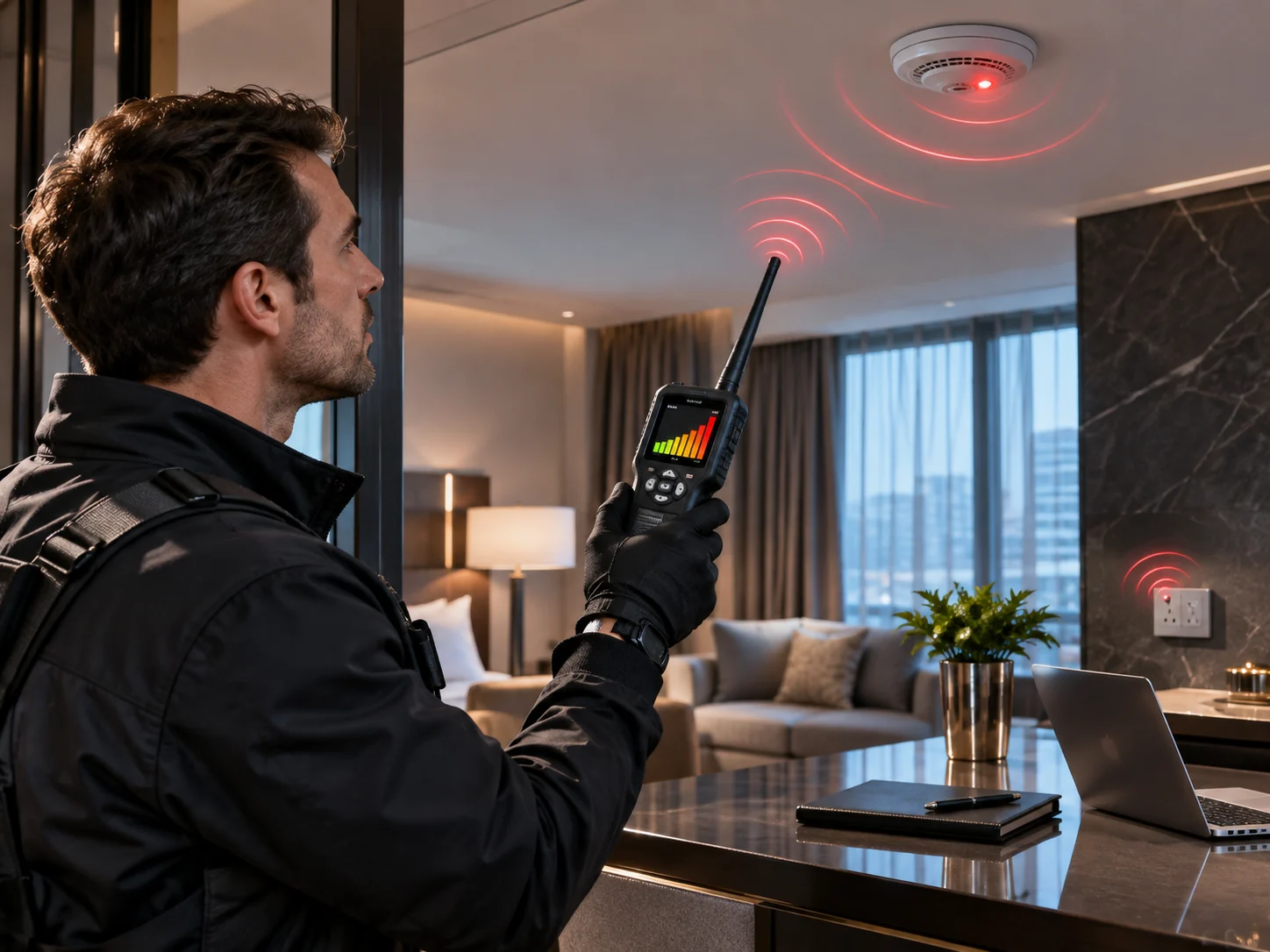
Explore instruments that assess radio activity — from everyday wireless electronics to potentially unwanted transmitters in a space.
Learn how RF detection works
Understand the devices used to locate cars, bags and equipment, including the different ways they determine and share a position.
Understand trackersNot every unexpected signal is suspicious. Reliable assessment means combining appropriate tools, careful observation and a realistic understanding of what readings mean.
Explore use casesInspect vehicle electronics and look for unexplained active transmissions — with appropriate permission.
Recognize ordinary radio sources and learn practical ways to protect privacy in spaces you control.
Assess radio activity in workspaces with the owner’s or manager’s authorization.
Select appropriate, lawful tracking solutions for property you own or are permitted to manage.
An RF detector measures energy within supported radio bands. A reading may indicate a transmission, but it cannot by itself distinguish a tracker from a router, phone or another ordinary device.
A GPS receiver ordinarily listens to satellites rather than transmitting to them. Finding a tracker may depend on observing its cellular or Bluetooth activity, physical signs or device-specific features.
Choose a scenario to see which tools and inspection approaches are worth learning about. No misleading claims of guaranteed detection.
If an unknown tracker is suspected, a suitable detector may complement an authorized physical inspection. Sleeping, powered-off and offline devices may produce no detectable transmission.
Read common questionsRoom inspections can combine RF instruments, visual examination and optical-lens checks. No RF sweep can rule out every recording device or wired camera.
Read common questionsIf you want to locate your own luggage or equipment, compare cellular GPS trackers with Bluetooth item finders. Range, power use, recurring fees and location methods vary significantly.
Read the basicsThe right device is only the beginning. Meaningful results require sound methods and an understanding of technical limitations.
Decide whether you are looking for an active radio transmitter, a passive recorder or a Bluetooth item tracker.
Consider sensitivity, distance, surroundings and ordinary wireless traffic before drawing conclusions.
Combine measurements with careful observation. In high-risk situations, seek qualified assistance.
Follow the science behind satellite navigation, trackers and radio detectors. Explore our connected library of 38 GPS and privacy features.
GPS / EXPLAINEDUnderstand satellite positioning, RF tools, tracker communication and the important limits of consumer detection devices.
Read the guide ↗SIGNAL / SAFETYHow interference differs from poor reception, what it can disrupt, and the safer response when navigation becomes unreliable.
Explore interference ↗TRACKERS / PRIVACYSee how location-tracking devices differ, what information they expose and which warning systems can help.
Understand trackers ↗DETECTION / ACTIONPractical, non-invasive steps for unexpected Bluetooth tracking alerts and professionally checking your own vehicle.
Read safety steps ↗THE SCIENCE OF TIMEAtomic clocks, orbital timing and the unexpected infrastructure hiding behind the familiar blue dot.
Read the full story ↗NAVIGATION UNDER PRESSUREUrban reflections, solar storms, jamming and spoofing: why navigation sometimes gives the wrong answer.
Read the full story ↗DETECTION INVESTIGATEDWhat an RF instrument actually measures, why false positives matter and what hidden devices can escape a scan.
Read the full story ↗CONNECTED OBJECTSBluetooth tags, cellular trackers, car services and the science and ethics of following an object—or a person.
Read the full story ↗DATA & SOCIETYThe hidden location-data economy: app permissions, brokers, geofencing and the stories that movement data can tell.
Read the full story ↗SIGNALS & SPACEWhy satellite signals struggle indoors, and how phones use other clues to find you inside buildings.
Read this feature ↗TRACKING TECHNOLOGYHow a short-range Bluetooth tag can be found far away through nearby participating phones—and what that means for privacy.
Read this feature ↗DETECTORS & PRIVACYWhy an RF sweep can miss a recorder that is not transmitting, and how to interpret detector results responsibly.
Read this feature ↗SIGNALS & SPACEHow charged particles in Earth’s upper atmosphere can distort satellite signals and degrade navigation.
Read this feature ↗DETECTORS & PRIVACYPrecise versus approximate location, ongoing sharing, and practical questions for a more meaningful permission audit.
Read this feature ↗REAL-WORLD SYSTEMSWhat the European eCall system sends after a serious crash and why it is not the same as constant surveillance.
Read this feature ↗TRACKING TECHNOLOGYGPS trackers and Bluetooth tags may both locate lost objects, but their radios, range, power use and privacy implications differ.
Read this feature ↗DETECTORS & PRIVACYWhy an RF detector can miss a dormant tracker, and what a careful inspection can and cannot establish.
Read this feature ↗DETECTORS & PRIVACYA non-invasive, safety-first guide to spotting unfamiliar tracking devices without damaging vehicle electronics.
Read this feature ↗SIGNALS & SPACEWhy location accuracy circles, satellite geometry and confidence levels should not be confused with a guaranteed address.
Read this feature ↗REAL-WORLD SYSTEMSWhy drone positioning depends on more than a GPS dot and how loss of satellite navigation changes operational risk.
Read this feature ↗DETECTORS & PRIVACYA practical safety-first explanation of documenting an unfamiliar device, preserving context and seeking help when needed.
Read this feature ↗Straight answers about signals, location devices and the limitations of consumer detection tools.
GPSNEAR KNOWLEDGE BASE · 2026No. An RF detector may notice an active transmitter within its supported bands. A sleeping, powered-off or offline tracker may remain undetected.
No. Navigation satellites broadcast timing and location signals; receivers listen. GPSNear’s satellite artwork is conceptual, not an actual remote tracker-detection service.
A detector is used to examine signals or physical signs of devices; a location tracker estimates or reports position. These are different technologies with different purposes.
Not reliably. RF tools respond to active emissions. A disconnected, recording-only or wired camera may require visual inspection or specialist equipment.
Many current iPhone and Android devices can issue warnings about compatible unknown Bluetooth item trackers moving with you. These alerts do not cover every cellular GPS tracker.
Inspect only spaces and property you are authorized to examine. Use trackers transparently and with the required consent and legal authority.
Explore the technology behind the wireless world, understand the risks and make more confident privacy decisions.
Explore technology